



Blog
How to Choose the Right Architect in Hyderabad
A Practical Guide for Homeowners and Developers
(By Deepa Saxena, Principal Architect with extensive experience in residential and commercial architecture across Hyderabad.)
On this page
- Why Choosing the Right Architect in Hyderabad Matters
- Step 1: Understand What You Actually Need
- Step 2: Look at Built Work — Not Just Renderings
- Step 3: Evaluate Their Design Thinking — Not Just Style
- Step 4: Understand Their Process
- Step 5: Verify Approval & Regulatory Experience
- Step 6: Address Vastu Early — Not After Design
- Step 7: Understand the Fee Structure Clearly
- Step 8: Assess Communication & Professionalism
- Step 9: Confirm Credentials
- Step 10: Think Long-Term
- Common Mistakes Clients Make
- FAQs: Choosing an Architect in Hyderabad
- Conclusion
If you are searching for the top architects in Hyderabad, understand this first:
- Poor ventilation and overheating
- Structural inefficiencies
- Costly mid-construction changes
- Waterproofing failures
- GHMC or HMDA approval delays
- Long-term maintenance problems
This guide explains what to look for — based on real project experience in Hyderabad.
Why Choosing the Right Architect in Hyderabad Matters
- High summer temperatures exceeding 40°C
- Intense west-facing heat gain
- Monsoon drainage and terrace waterproofing issues
- Varying soil conditions (rocky terrain, black cotton soil in outskirts)
- Rapidly urbanising neighbourhoods
- Parking and setback constraints
- GHMC / HMDA compliance requirements
It is about climate response, structural clarity, and technical precision.
Step 1: Understand What You Actually Need
- Independent house construction
- Villa in a gated community
- Apartment interior fit-out
- Commercial or mixed-use building
- Renovation or extension
- A G+3 residential building demands structural coordination and approval depth.
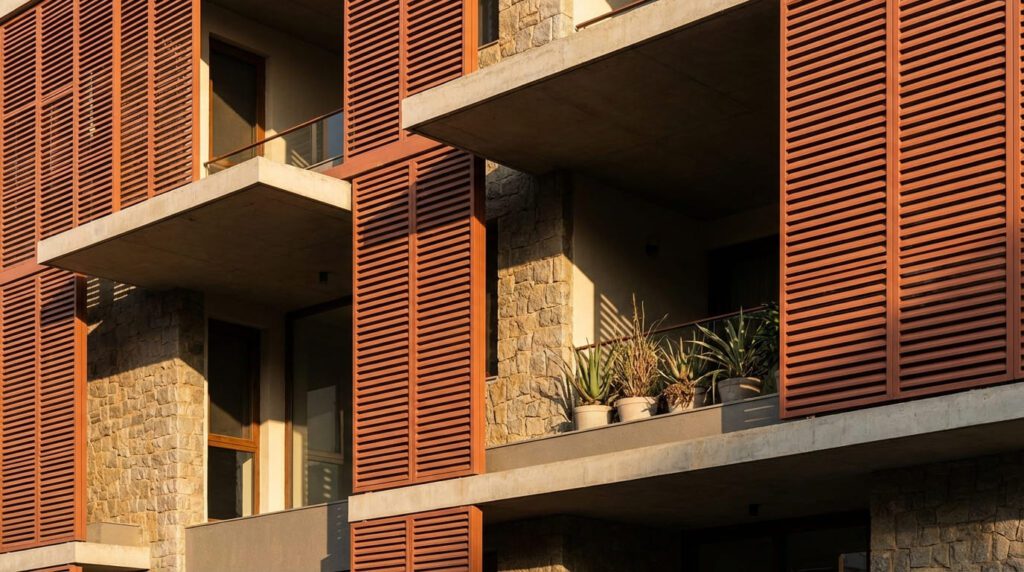
- A villa design demands sensitivity to light, ventilation, and privacy.
- A commercial building requires fire norms, service planning, and accessibility compliance.
Step 2: Look at Built Work — Not Just Renderings
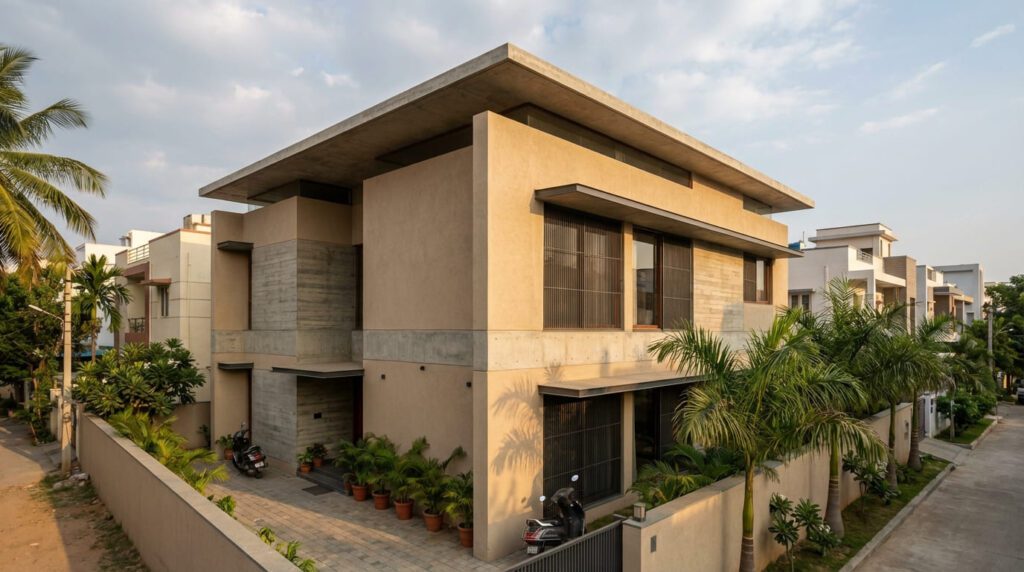
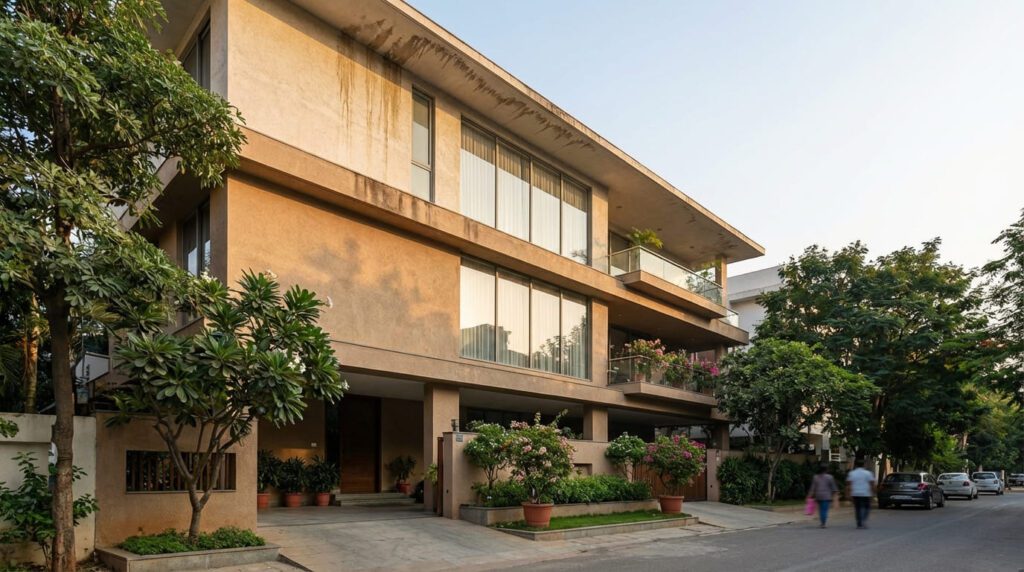
3D images are easy to produce. Built projects reveal true capability. You can review some of our completed residential projects in Hyderabad to understand how design decisions perform over time.
- Can I visit a completed project?
- How old is the building? Has it
- performed well over time?
- Whether waterproofing was detailed correctly
- Whether ventilation works in peak summer
- Whether materials were chosen wisely
- Whether proportions feel comfortable in reality
Step 3: Evaluate Their Design Thinking — Not Just Style
- How do you approach site orientation?
- How do you reduce heat gain in Hyderabad’s climate?
- How do you balance aesthetics and performance?
- How do you plan for future expansion?
- Initial cost vs long-term maintenance
- Open layout vs structural efficiency
- Visual ambition vs thermal comfort
Step 4: Understand Their Process
1. Requirement Analysis
Lifestyle, family structure, budget, vastu expectations.
2. Concept Design
Site-responsive planning and zoning.
3. Design Development
Detailed drawings with structural coordination.
4. Working Drawings
Precise construction-level documentation.
5. Site Supervision & Coordination
You can read a detailed explanation of our architectural design process here.
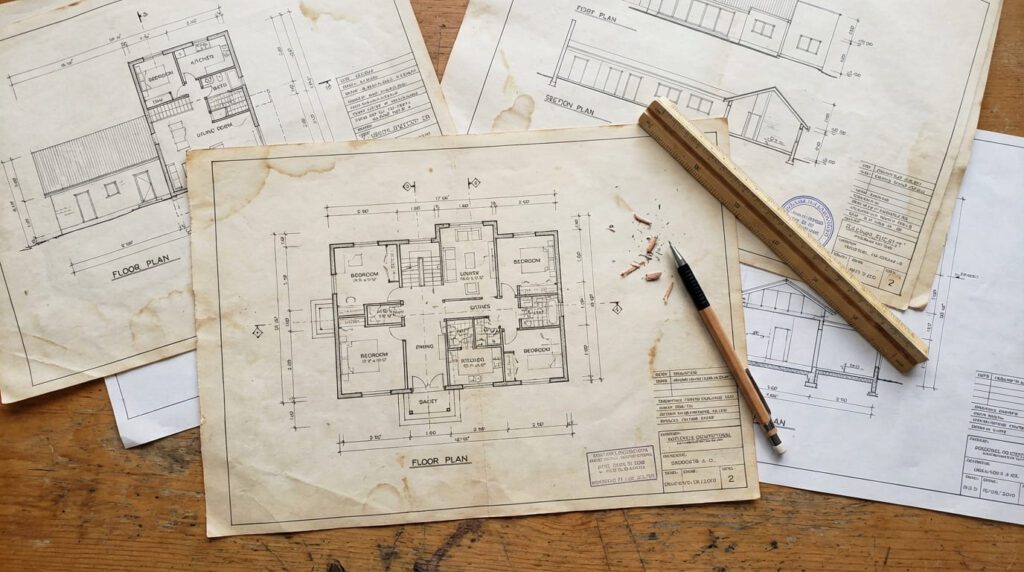
- How detailed are your working drawings?
- Do you coordinate structural and MEP consultants?
- How many site visits are included?
Step 5: Verify Approval & Regulatory Experience
- GHMC limits
- HMDA jurisdiction
- Gram panchayat areas
- Setback compliance
- Height restrictions
- FAR calculations
- Zoning regulations
- Structural certification
- TS-bPASS submission processes
Step 6: Address Vastu Early — Not After Design
If vastu matters to you, discuss it at the beginning.
- Awkward room shapes
- Structural complications
- Wasted space
- Costly changes during construction
Step 7: Understand the Fee Structure Clearly
- Percentage of construction cost
- Lump sum fee
- Per square foot basis
Very low fees often indicate:
- Limited scope
- No site supervision
- Poor working drawings
- Inexperience with approvals
- What is included?
- What is excluded
- Are structural & MEP consultants separate?
- Is site supervision part of the scope?
Step 8: Assess Communication & Professionalism
Construction projects can span 18–36 months.
Ask:
- Will the principal architect stay involved?
- Who is my point of contact?
- Are site instructions documented in writing?
- Do you maintain revision logs?
Professional practice involves documentation, coordination, and accountability
Step 9: Confirm Credentials
- COA registration
- Years of experience
- Consultant network
- Structural coordination process
Step 10: Think Long-Term
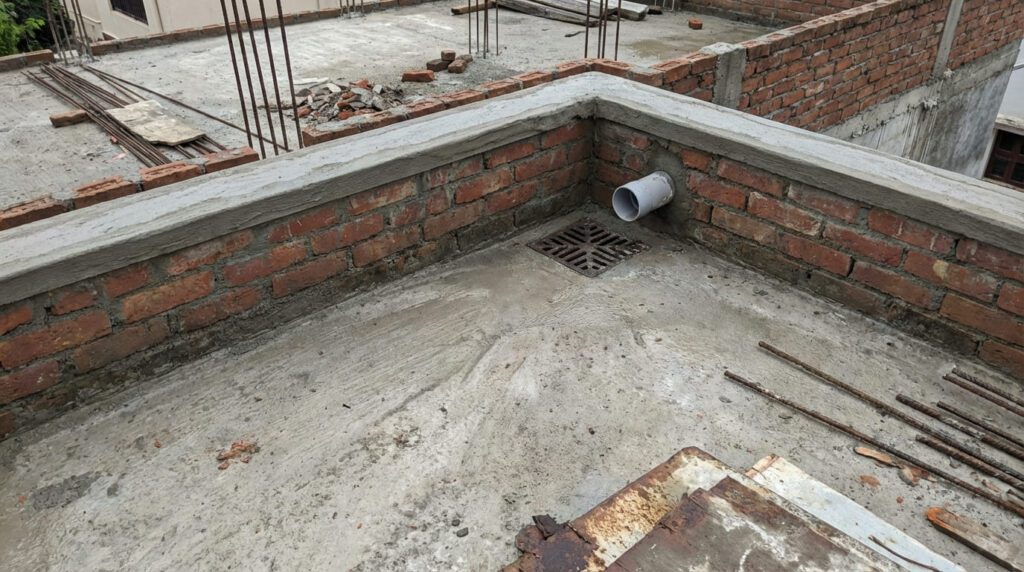
- Ventilation strategy
- Shading devices
- Roof insulation
- Rainwater drainage slopes
- Plumbing shaft accessibility
- Waterproofing detailing
These are details most clients never see — but experience deeply later.
Common Mistakes Clients Make
1. Selecting based on lowest fee
2. Finalising contractor before design is complete
3. Ignoring climate response
4. Prioritising façade over planning
5. Making major layout changes during construction
6. Underestimating approval timelines
7. Not reviewing working drawings
FAQs: Choosing an Architect in Hyderabad
Conclusion
- Climate
- Regulations
- Structural coordination
- Long-term building performance
- Clear documentation
- Site execution realities
It is the result of careful analysis, structured design development, and disciplined supervision.
Mdeepa Architects is a professional architectural practice based in Hyderabad, working on residential and commercial projects across Telangana and Andhra Pradesh.
If you are planning to build or renovate and want clarity before you begin, you can schedule a consultation with Mdeepa Architects at the right stage to prevent costly mistakes later.
On this page
- Why Choosing the Right Architect in Hyderabad Matters
- Step 1: Understand What You Actually Need
- Step 2: Look at Built Work — Not Just Renderings
- Step 3: Evaluate Their Design Thinking — Not Just Style
- Step 4: Understand Their Process
- Step 5: Verify Approval & Regulatory Experience
- Step 6: Address Vastu Early — Not After Design
- Step 7: Understand the Fee Structure Clearly
- Step 8: Assess Communication & Professionalism
- Step 9: Confirm Credentials
- Step 10: Think Long-Term
- Common Mistakes Clients Make
- FAQs: Choosing an Architect in Hyderabad
- Conclusion